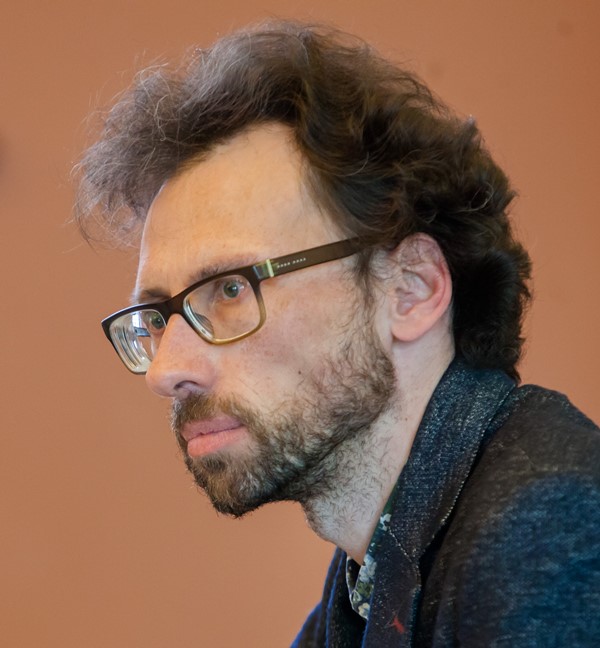
Dr. Liudas Jovaiša
Keynote speaker
Biography
In 2004, he defended his doctoral dissertation in history (humanities) at Vilnius University on the topic “The Catholic Reformation in the Diocese of Samogitia.” Since 2002, he has been teaching at the Faculty of History at Vilnius University (most recently in the Department of Ancient and Medieval History); he is an associate professor. He has been a member of the Lithuanian Catholic Academy of Sciences since 2009 and was awarded the Martynas Mažvydas Prize in 2016.
Abstract
From the first performance at the Jesuit college of Messina in 1551, theatre gradually and firmly became rooted in the teaching agenda of the Jesuit schools, and covered the entire space of the Early Modern Catholic Europe. In 1570, the first play, Hercules by Italian Jesuit Stefano Tucci, wass staged in Vilnius on the occasion of the opening of the Jesuit college; it was the first known theatrical performance in Lithuania and thus a starting point of the history of theatre in Lithuania.
Drawing on the rhetorical principles of Classical Antiquity, Jesuit theatre served both the educational needs and the curiosity of the local audience, imprinting Christian moral values and enhancing the reputation of the Society of Jesus. Jesuit drama could have been an inspiration for some of the greatest playwrights of the Western world, including Molière, Calderón de la Barca, and Goldoni, who were students at Jesuit colleges and probably acted in plays there. The paper aims to provide an overview of Jesuit theatre in Early Modern Europe, with special attention to Jesuit drama performances in Lithuania.
Drawing on the rhetorical principles of Classical Antiquity, Jesuit theatre served both the educational needs and the curiosity of the local audience, imprinting Christian moral values and enhancing the reputation of the Society of Jesus. Jesuit drama could have been an inspiration for some of the greatest playwrights of the Western world, including Molière, Calderón de la Barca, and Goldoni, who were students at Jesuit colleges and probably acted in plays there. The paper aims to provide an overview of Jesuit theatre in Early Modern Europe, with special attention to Jesuit drama performances in Lithuania.